RII Core Facility Pilot Grants - Feb 5, 2025 deadline

Date of publication

Description: The RII Core Facilities Pilot Program is designed to support three key types of activity within the RII-managed core facilities. Each CFPP proposal will be evaluated on scientific merit and feasibility, and should focus on one or more of the following activity types:

  1. The development of new methods or techniques that would extend the standard operating procedures and capabilities of RII-managed core facilities and potentially impact multiple UA researchers. Successful projects will result in new methods or techniques which will be disseminated to the UA research community via the core’s website, and be incorporated into the core’s standard operating procedures and capabilities.
  2. The acquisition of preliminary data needed for extramural proposals. Successful projects will result in at least one new extramural research proposal. PIs must note the specific extramural funding opportunity announcement for which they plan to submit and their anticipated submission date along with their CFPP application. A full justification of the anticipated studies is required.
  3. The technical training of students conducting research under existing extramural funding. Successful projects will result in student researchers with the technical skills to operate equipment safely, efficiently and independently within the core facility(ies). PIs should note the student(s) to be trained, the core(s) in which they will be trained, the equipment on which they are to be trained, and the funding source under which the student’s research project is funded. Proposals to train students from traditionally marginalized groups will be given funding priority.

Due date: February 5, 2025 at 5pm
To apply, see UA Cultivate

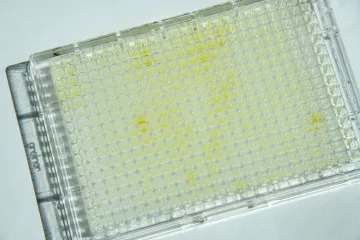
ELISA Testing

Specializing in genetic and serological (ELISA) technologies, Arizona Molecular Clinical Core (AZClinCore) facilitates clinical trial and clinical research activities for physicians, researchers and industry clients. The AZClinCore has aided numerous industry and research partners to:

  • Conduct clinical research
  • Develop novel clinical testing services
  • Process specimens for clinical trials
  • Provide new technology and platform evaluations in a CAP/CLIA environment

AZClinCore's services are scalable; from processing a few specimens to hundreds at a time.

AZClinCore has developed a multitude of COVID-related research ELISA assays including variant-specific quantitative titer and surrogate neutralization assays. With its high-throughput capabilities facilitated with an array of Beckman liquid-handling robots and highly trained clinical technologists, AZClinCore has the capacity to process 5,120 qualitative reactions and 768 quantitative titer reactions per day. For more info, see: COVID-19 ELISA pan-Ig Antibody Test

Image
ELISA Plate

University of Arizona

Service

Pharmacogenetic Testing

PGx testing (pharmacogenetic analysis) is performed to provide information for clinicians prescribing medication for patients. The University of Arizona Molecular Clinical Core (AZClinCore) pharmacogenetics panel targets 61 variable sites within 18 different genes involved with drug metabolism and transport pathways. DNA is isolated from a patient cheek swab and genomic regions containing the various polymorphic sites are amplified and subsequently tested using the Agena MassArray™ platform. The allelic status of each site is then recorded and results are converted into a patient haplotype profile. These haplotype profiles can be used to assess the metabolic status of known drug classes and specific medications for each individual patient

See details on the Arizona Molecular Clinical Core website: https://azclincore.arizona.edu/clinical-testing/pharmacogenetics

Image
Pharmacogenetic testing
Service

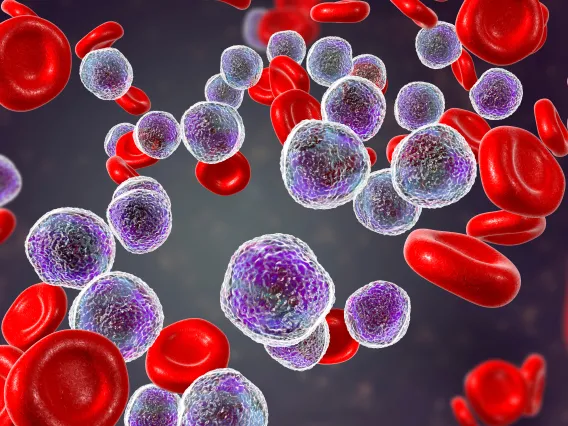
Chimerism testing for engraftment analysis

Chimerism testing (engraftment analysis) is performed for patients who have received a hematopoietic stem cell transplant. The test involves identifying the genetic profiles of the recipient and the donor and then evaluating the extent of mixture in the recipient’s blood or bone marrow. First, DNA is isolated from the recipient and potential donor before the transplant and analysis is performed to determine whether the genetic markers unique to the donor and the recipient have sufficient power to distinguish the donor from the recipient. Next, after the transplant takes place, the performance of the transplant engraftment is assessed by evaluating the donor versus recipient contribution of white blood cells in post-transplant blood or bone marrow specimens obtained from the recipient.

See testing details on the AZClinCore Website: https://azclincore.arizona.edu/clinical-testing/chimerism

Image
Blood Cells
Service

Nanostring nCounter Gene Expression Analysis

AZCG offers gene expression services using the NanoString nCounter® Analysis System. This system uses molecular "barcodes" and single-molecule imaging to profile up to 800 mRNAs, microRNAs targets simultaneously with high sensitivity and precision, without any reverse transcription or amplification.

General Information


Sample Input

Gene Expression, miRNA and miRGE Assasys:
        •  100ng purified total RNA or 300ng degraded


 AZGC offers a variety of extraction services for most sample types, please inquire for details and pricing.

Expected Results

Gene Expression
Limit of Detection:
        •  0.5fM spike-in control (~1 copy per cell); 90% of the time
Fold-change Sensitivity:
        •  >1.5 fold (>5 copies per cell)
        •  >2 fold change (>1 copy per cell)
miRNA Assay
Limit of Detection:
        •  ≤ 0.5fM (~10 copies per cell)
Fold-change Sensitivity:
        • > 2 fold change
 

Details

Sample Preparation Details

Varies, please inquire.

Workflow

A variety of pre-designed panels are available for off-the-shelf use. Each cartridge can run up to 12 samples, and most panel kits are sold with chemistry for 12, 24, 48 or 96 samples (Custom Panels start at 48 samples). For a complete list of the number of samples and specific genes covered by each panel, please visit the following links: Nanostring website. 
 
Custom CodeSets
For ultimate flexibility, you can work with NanoString directly (consultation is free of charge) to design a custom Gene Expression or Copy Number Variation code set tailored exactly to your research needs. This is especially useful for organisms that don't already have pre-built panels, hard-to-target sequences, and splice variation and fusion transcript detection. The custom CodeSet design process begins by selecting a list of targets and submitting them to NanoString. Once the design is approved by you, their Manufacturing Group will assemble your CodeSet, perform extensive quality control testing, and ship all components directly to AZGC for processing. Custom CodeSet pricing is matrix based, with the price per data point declining with increasing numbers of genes and numbers of samples assayed.
 

Price

Academic (UA): $575.00 | Academic(non-UA): $690.00 | Industry: $862.50 | Unit: Cartridge

Note- Cost per Cartridge does not include QC, additional labor or NanoString Code Sets. Reagents must be purchased separately. Please inquire for more details.

Turnaround Time

Depends on assay type and sample quantity, please inquire.

Related Services

Sample Prep and QC

Service
Location